Page : AA-47/51
(Modified 5/2021)
Congratulations! If you have come this far, there are a few thoughts that might be appropriate :
...Because all the parts of the violin interact with each other; when one thing is changed, it may also have an influence elsewhere, which means that our adjustments probably changed something we have already done previously.
..You should probably re-check the three main frequencies of the bridge now and readjust if necessary.
..Carefully measure and readjust the nut and end pin frequencies as needed.
..Do not be discouraged if you need do several rounds of retuning. Your violin will get slowly better and more enjoyable to play...
..All my personal best to you and your music!
David Langsather, Salem, Oregon, USA 7/ 2021
(info@violinresearch.com)

This last phase of bridge tuning makes a surprising difference to sound quality. Like saving the best to last!
We are now going to tune the three little bars that vibrate and interact with the overall bridge musical sound, { The Heart Wing of the heart, and the Wings of the kidneys...}, THEN the three faces of the Bridge, and finally the
Bridge feet.
G
E
213 HZ
306 HZ
252.7 HZ
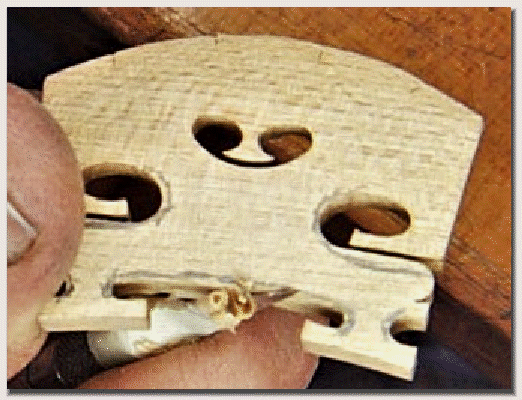
First we shorten the Kidney Wings to 0.20" wide from the outside curve of the kidney hole shape.
Cut this by backing the bridge onto a wood block and cutting off the over 0.20" material from the free end {sharp knife or chisel}
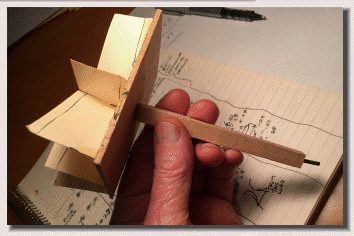
We hear these tap tones by sliding the metal tip of the special tool, beginning on the bridge surface at the beginning of the red arrows and then letting it tap against the wood at the arrow end. Compare to the wood reference tap tone tool; or listening for "in harmony" tap with bass bar / top plate reference tool.
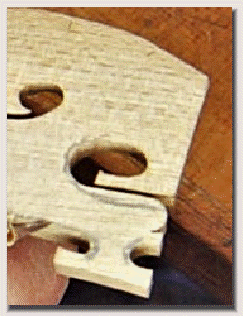
View from above looking downward or from below looking upward, of the Kidney Wings.
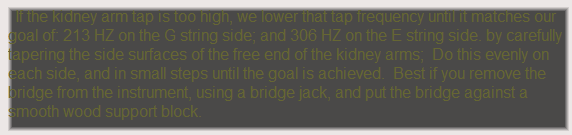
If the tap tone is too low; then raise by evenly sanding on both sides evenly in area shown (in very small steps) until the goal tap tone is reached.:
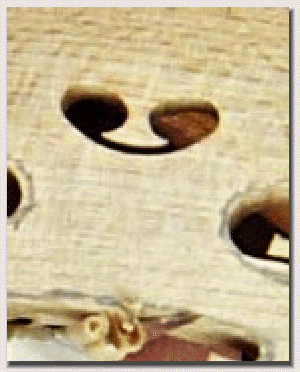
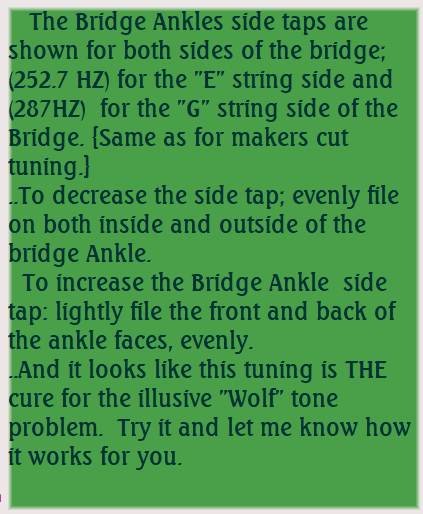
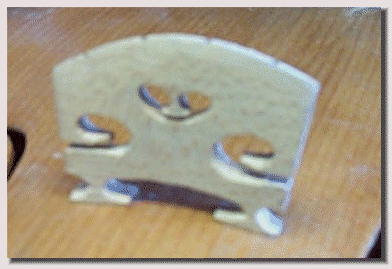
Lastly, we will tune the Heart Wing of the bridge Heart shape to 252.7 HZ (tapped from either side as shown in top photo on this page. )
If the current side tap tone is above 252.7 HZ; then lower by trimming the bottom flare of the Uvula, equally on both sides a slight amount at a time until goal is achieved. Trim with bridge flat against a support block of wood. Do NOT trim wood from center support!, only the ends of the tips at the bottom.
If the current side tap tone of the heart wing is below 252.7 HZ; then raise by sanding slight amounts of wood from both sides equally in area shown.
Re install on your instrument and enjoy!
E
G
(252.7) HZ
( 287) HZ
Before use, we want the top surface and the side surface of the Bridge to be in harmony with each other. When they are, you will find that the top frequency is 242 HZ (same at the back plate of the violin) and the side frequency is (227 1/2) HZ (same as the ribs of the violin) ; and both sides match each other.
The top surface of the Bridge should be tuned from the center out to that side surface of the Bridge. Then the other side. If one surface (or part of that surface) has a too- high tap tone, it should be carefully scraped, filed, or sanded lightly until all is in harmony.
This is VERY important for good sound production.
(227 1/2) HZ
242 HZ
(updated: 11/2020)
PageVRT_12
All the front tap tones of the bridge (above the ankles) should be even and 213 HZ , same as the top plate.
Scrape down any spots too high.
Recheck the top and sides again.
This is the basic tuning of the bridge.
Then do the fine tuning of the feet and kidney shapes to emphasize proper tone production.
by David Langsather Webmaster : www.violinresearch.com


"...It seems therefore, that the practice of precisely book-matching the wood on the bass and treble sides of the instrument that is virtually universal amongst 20th Centruy makers was considered less important in the classical period of violin-making."
...The authors then leave this subject without further comment; however, when I read this, my jaw dropped and I became very interested. Consider what they uncovered: 'del Jesu' made his most famous and sought after violins late in his life and during at that period he often used mis-matched wood for his two piece top plates as did many of the other famous Cremona violin makers of the early to mid 1700's!
.....Makers the last 100 or 150 years have not, univerally 'book matching' the top plates with wood grown next to each other on the same tree; and violins from this later period are usually found to be inferior to the earlier master instruments! It just occured to me that this might very well be one of the important reasons for the superiority of the master makers of the 1700's.
...Maybe it is high time we current makers learn a lesson from our betters!